
Understanding the Connection Between Circulation and Pain
Pain in the legs or feet is often associated with muscles, joints, or nerves, but circulation can also play an important role. Peripheral artery disease, commonly called PAD, occurs when arteries that carry blood away from the heart become narrowed or blocked. The condition most often affects the legs and can reduce the amount of oxygen-rich blood reaching muscles and other tissues. At Pain & Vascular Institute in Fox River Grove, IL, patient education about vascular conditions can help individuals better understand why persistent leg discomfort deserves attention.
PAD is generally associated with atherosclerosis, a process in which plaque accumulates inside the arteries. Plaque contains cholesterol, fat, calcium, and other substances. As this buildup progresses, the space available for blood to travel through the artery becomes smaller. Reduced blood flow may not initially produce obvious symptoms, but discomfort can develop as tissues require more oxygen than narrowed arteries are able to deliver.
Why Reduced Blood Flow Can Cause Leg Pain
Muscles need a continuous supply of oxygen and nutrients to function properly. During physical activity, their demand for oxygen increases. Healthy arteries respond by delivering additional blood to active muscles. When PAD restricts circulation, however, blood flow may not increase enough to meet that demand. This imbalance can produce pain, aching, cramping, heaviness, or fatigue.
A classic PAD symptom is intermittent claudication. This refers to discomfort that develops during activities such as walking and improves after a period of rest. The pain frequently occurs in the calf, although it can also affect the thigh, hip, or buttock depending on where an artery has become narrowed. A predictable pattern of pain that appears with exertion and resolves with rest can provide an important clue that circulation may be contributing to the symptoms.
Recognizing Other Warning Signs of PAD
Not everyone with peripheral artery disease develops classic claudication. Some people have mild or atypical symptoms, while others may attribute their discomfort to arthritis, aging, or being out of shape. In addition to pain with activity, PAD may cause weakness, heaviness, numbness, or unusual fatigue in the legs. One leg or foot may sometimes feel cooler than the other.
As circulation becomes more severely impaired, additional changes may become noticeable. Hair growth on the legs may decrease, toenails can grow more slowly, and the skin may appear shiny or change color. Pulses in the feet may become weaker. Cuts, sores, or other injuries on the toes, feet, or legs may also heal more slowly because adequate blood flow is essential for tissue repair.
More advanced PAD can cause pain even while a person is resting. This discomfort may be especially noticeable in the feet or toes at night when lying down. Persistent rest pain, wounds that do not heal, or significant changes in skin color require prompt medical evaluation because they can indicate severely reduced circulation.
Understanding Who Is More Likely to Develop PAD
Peripheral artery disease becomes more common with age, but age alone does not determine who develops the condition. Cigarette smoking is a major risk factor because tobacco exposure damages blood vessels and accelerates atherosclerosis. Diabetes is another important contributor, particularly when blood sugar remains elevated over time.
High blood pressure and unhealthy cholesterol levels can also contribute to plaque accumulation and vascular damage. People with a history of coronary artery disease, heart attack, or stroke may have an increased likelihood of PAD because atherosclerosis can affect arteries throughout the body rather than in only one location.
Family history and kidney disease may also influence vascular risk. Because some people have PAD without obvious symptoms, understanding personal cardiovascular risk factors is important even when leg pain is absent.
How Healthcare Professionals Evaluate Circulation
Evaluation generally begins with a discussion of symptoms and medical history. A healthcare professional may ask where discomfort occurs, what activities trigger it, how quickly it improves with rest, and whether there are wounds or changes in the skin. The legs and feet may be examined for temperature differences, skin changes, slow-healing wounds, and the strength of arterial pulses.
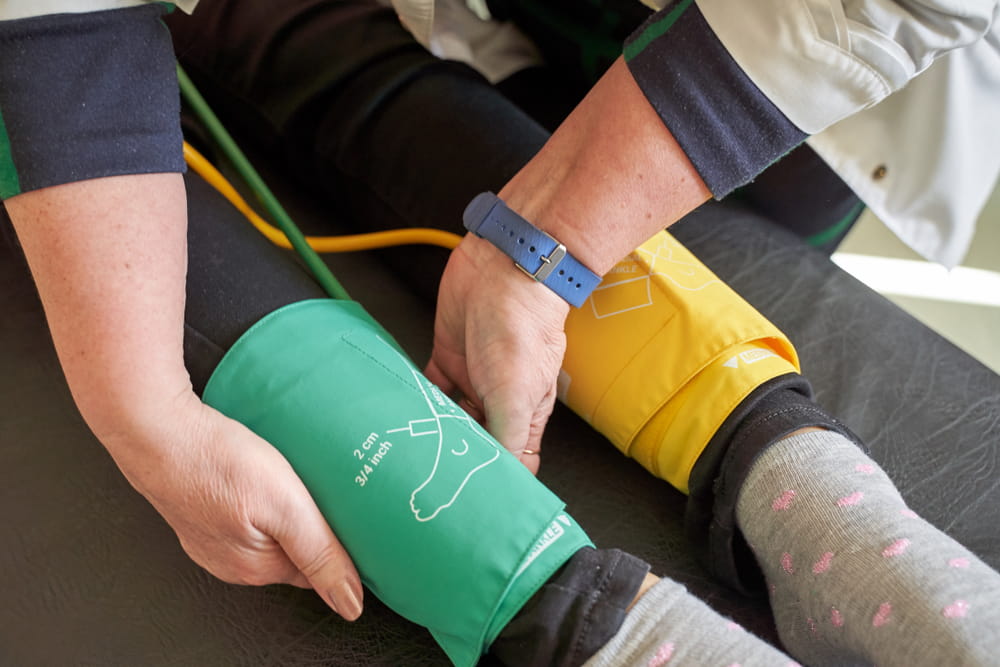
One commonly used test is the ankle-brachial index, or ABI. This noninvasive test compares blood pressure measured at the ankle with blood pressure measured in the arm. A significant difference may suggest reduced blood flow to the legs. Additional testing, including vascular ultrasound, can provide information about blood flow and help identify areas where arteries may be narrowed.
In some circumstances, more detailed imaging may be recommended. The appropriate tests depend on symptoms, physical examination findings, medical history, and the severity of suspected circulation problems.
Treatment Often Begins With Cardiovascular Risk Reduction
Managing PAD involves more than relieving leg discomfort. Because atherosclerosis can affect arteries supplying the heart and brain as well as the limbs, treatment frequently focuses on reducing overall cardiovascular risk. Smoking cessation is particularly important for people who use tobacco. Managing blood pressure, cholesterol, and diabetes can also help protect blood vessels and reduce the likelihood of complications.
Healthcare professionals may prescribe medications depending on a patient’s individual risk factors and medical history. These can include therapies designed to manage cholesterol, blood pressure, blood clot risk, or symptoms associated with PAD. Medication decisions should be individualized, and patients should not start or discontinue cardiovascular medications without professional guidance.
How Walking and Exercise Can Improve Function
It may seem counterintuitive to walk when walking itself causes leg discomfort, but structured exercise can be an important component of PAD management for appropriate patients. Regular walking can help the body use oxygen more efficiently and may improve how far a person can walk before symptoms become limiting.
Supervised exercise therapy may provide additional structure by helping patients gradually increase walking duration and intensity. Exercise recommendations should account for overall health, mobility limitations, heart conditions, and the severity of PAD. The objective is controlled, progressive activity rather than pushing through severe or unusual pain without medical guidance.
Exercise also supports broader cardiovascular health by helping with blood pressure, glucose management, physical conditioning, and weight management. These benefits make regular activity an important part of many long-term vascular health plans.
When Procedures May Be Needed to Restore Blood Flow
Lifestyle changes and medications may be sufficient for some individuals, but more advanced PAD sometimes requires procedures designed to improve circulation. Endovascular treatments may be used to open narrowed or blocked arteries from inside the blood vessel. Depending on the situation, techniques can include angioplasty, in which a small balloon is used to widen an artery, and placement of a stent to help maintain blood flow.
Other patients may require surgical bypass procedures that create a new route for blood to travel around a severely blocked artery. The decision to pursue an intervention depends on several factors, including the location and extent of arterial disease, severity of symptoms, effect on daily activities, presence of wounds, and overall health.
Protecting the Feet When Circulation Is Reduced
Foot care becomes especially important when PAD is combined with diabetes or reduced sensation. Poor circulation can slow healing, while neuropathy may make an injury difficult to feel. A small blister or cut can therefore become more serious before a person realizes there is a problem.
Checking the feet regularly for wounds, redness, swelling, discoloration, or other changes can help identify concerns sooner. Proper footwear can reduce pressure and friction. Persistent sores, signs of infection, or noticeable color and temperature changes should be medically evaluated rather than managed solely at home.
Paying Attention to Pain That May Be Vascular
Leg pain should not automatically be assumed to come from the muscles, joints, or spine. When discomfort consistently appears during walking and improves with rest, circulation should be considered as a possible contributor. Recognizing PAD is important not only for improving mobility but also because the condition can be a sign of atherosclerosis elsewhere in the cardiovascular system.
Pain & Vascular Institute in Fox River Grove, IL, encourages patients to understand the potential relationship between vascular health and persistent pain. Identifying circulation problems early can create opportunities to address cardiovascular risk factors, protect the legs and feet, and determine whether lifestyle changes, medications, structured exercise, or vascular procedures may be appropriate. Anyone experiencing persistent leg pain, slow-healing wounds, or significant changes in a foot or leg should discuss those symptoms with a qualified healthcare professional.
Resources
Gerhard-Herman, M. D., Gornik, H. L., Barrett, C., Barshes, N. R., Corriere, M. A., Drachman, D. E., et al. (2017). 2016 AHA/ACC Guideline on the Management of Patients With Lower Extremity Peripheral Artery Disease. Circulation, 135(12), e726–e779.
National Heart, Lung, and Blood Institute. (2022). Peripheral Artery Disease. National Institutes of Health.
American Heart Association. (2024). Peripheral Artery Disease (PAD). American Heart Association.
